Stop SOPA/PIPA

Showing posts with label tony kushner. Show all posts

Thursday, August 11, 2011

Bucket list, part II


Earlier I gave you the list of performers I want to see at least once in my lifetime. Here is my list of shows I want to see, sooner rather than later. (I'm sure I'm overlooking many important works, of course, so this list is a work in progress. Feel free to make suggestions!)


Shows and playwrights I've never seen but really need to:
Amadeus
The Ballad of the Sad Cafe (love Carson McCullers--no idea if this is any good as a play, but I want to see it)
Damn Yankees
The Rocky Horror Show
Thoroughly Modern Millie

Bertolt Brecht
Anton Chekhov done well [I have high hopes for the Lyric Theatre production in Belfast]
Eugene O'Neill (It doesn't count that I've spent a lot of time at his theater.)
August Wilson

NOT on my list:
Cats
Chicago
Les Misérables
The Phantom of the Opera

Andrew Lloyd Webber's entire oeuvre (but I AM going to see Ricky Martin in Evita--SHUT UP. I have a soft spot for Menudo and for that show.)


Shows I've already seen (NYC or regional) but want to see again:
Altar Boyz
American Idiot (but probably only with the original choreography--YAY FOR THE TOUR!)
Assassins
Black Watch (heartbreaking, but I could watch it over and over)
Billy Elliot (though preferably in London with decent accents)
A Chorus Line (my first Broadway show, and still one of my all-time favorites)
Company
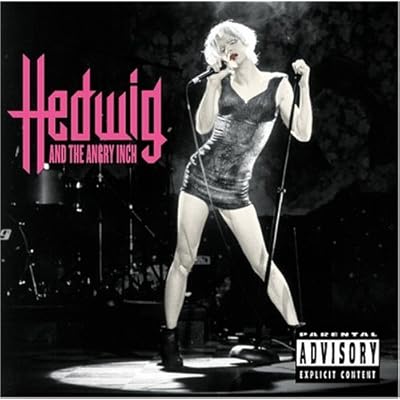
Hedwig and the Angry Inch (with John Cameron Mitchell, if possible)
Inherit the Wind
Man of La Mancha
The Music Man
One Flew Over the Cuckoo's Nest
Sweeney Todd
Who's Afraid of Virginia Woolf?

NOT on my list:
Gypsy
Hair
Act II of Sunday in the Park with George

(Click below for a list of people whose work I love and want to see more from.)

Tuesday, July 12, 2011

The Illusion and Signature's Kushner season

http://signaturetheatre.org/illusion


The Illusion is a Tony Kushner adaptation of a play by Pierre Corneille, a seventeenth-century French playwright I know nothing about and now feel no need to investigate. The actors were excellent but I just didn't care about the play. It was certainly the most lighthearted of the shows I saw that weekend, but it's not my kind of farce, and the conclusion was fairly disheartening.

On the other hand, the look that lighting designer Kevin Adams and set designer Christine Jones, frequent collaborators, created is interesting and quite beautiful. I wanted to walk around and touch the various votives and other light-giving objects near the stage, and I wanted to take the overhead light sculpture home with me. Jones's off-stage set design here is reminiscent of Spring Awakening's chock-a-block, stuff-stuck-on-a-brick-wall design (which I loved), but Adams's is unlike any of his other work I've seen. Their efforts were by far my favorite aspect of this production.

I loooooooooove Kevin Adams's lighting design for the show. Unlike with Spring Awakening, Passing Strange, and Next to Normal, it is understated and beautiful (more Mirror Blue Night, less Feeling Electric). No neon lights in sight! I think the lighting designs of those three earlier shows were certainly appropriate to their material, but I was just bored by the concept by the time Passing Strange rolled around, and I don't have any idea how Adams could possibly one-up that wall of light. (To be fair, I also saw several off-Broadway shows at the Vineyard and at Second Stage that Adams lit, plus The 39 Steps on Broadway, and don't remember being overwhelmed by them at all. Hair was in the middle, for me--fine, but I definitely suspected it was him.)

I really don't have much to say about this show other than that. I love Lois Smith (from the movie Twister and the TV show True Blood among more serious fare), and she was charming here. Merritt Wever, whom I generally know only from Aaron Sorkin's short-lived TV show Studio 60 on the Sunset Strip, was funny with the conniving and strangely anachronistic role she was given. Henry Stram, however, was so good in what was pretty much the only role in the show that I really liked. He's good at being weird and creepy. (I liked about half the characters he did as the Adult Men in the first national tour of Spring Awakening, and he was pretty good as a drunken lech in the Huntington Theatre's entirely unnecessary production of William Inge's Bus Stop last season.)

At least I finished out The Signature Theatre's Kushner-centric season. I loved iHomo (which I told Kushner when I ran into him at Starbucks one day), really liked Angels in America Part I, liked Angels Part II even though I didn't understand when it turned so weird, and have almost entirely forgotten The Illusion even though it's the one I saw most recently. Alas, I just wish iHomo were still running.

Tuesday, June 21, 2011

Feast or famine

I went a full month without seeing any theater performances and then had a couple three-show weekends in a row. I should have planned better because all six shows were plays and depressing ones at that. I should have thrown in Billy Elliot (again) or some other musical for balance. It's a miracle I didn't jump off a bridge at some point along the way.

Weekend 1: The Normal Heart (Broadway), War Horse (National Theatre London at Lincoln Center), and The Intelligent Homosexual's Guide to Capitalism and Socialism with a Key to the Scriptures (Signature Theatre/The Public)

Weekend 2: The Illusion (Signature Theatre), Side Effects (MCC), and Through a Glass Darkly (Atlantic Theater at the New York Theatre Workshop)

I've already reviewed Tony Kushner's iHomo. Other than sounding a bit stale in their overlapping dialogue (the timing for which I had expected to improve but, alas, didn't), the show is just as great as I remembered it. I'm still completely in love with Michael Esper and Stephen Spinella's performances. And Linda Emond is still brilliant.

I'm headed to Seattle/Alaska later this week, so I promise all these upcoming reviews will be short (for once). And it's going to be another month before I see another show. So when I get back, I'll try to review some of the shows I saw earlier this year (Good People, Arcadia, Jerusalem, etc.).

Saturday, April 23, 2011

The Intelligent Homosexual’s Guide to Capitalism and Socialism with a Key to the Scriptures


This play and especially this cast are completely brilliant. In fact, I'm downright in love with them. I like shows that make me feel ignorant but not stupid--ones that make me want to read, read, read to catch up. Or, in the case of Tom Stoppard's Arcadia revival now on Broadway, make me want to scour Wikipedia and then ask my husband to explain the math and science. The same is true for Tony Kushner's The Intelligent Homosexual’s Guide to Capitalism and Socialism with a Key to the Scriptures at the Public Theater. (How ridiculously long is that title? I think others are calling it iHo--iHo? really?--but for me it's iHomo.)

iHomo drops so many names of seminal works in political economy that I can't even remember them all in order to look them up. That's one reason it's so frustrating that the play isn't published yet (well, I can't find it on Amazon). The other is that there are often two or more conversations going on at the same time, with important things being said and not just throwaway lines for effect. Somehow, much of it is actually intelligible, and that is a miracle of timing on the actors' part. Still, when they all started shouting over each other toward the end, from my seat on the outer aisle I couldn't follow what was happening on the other side of the stage. Of course, that just gives me a happy excuse to go see it again.

Overlapping or interrupted dialogue often goes horribly, horribly wrong (e.g., almost every David Mamet production I've ever seen). But the dialogue in iHomo--and its perfectly timed delivery--is achingly real, even as the characters have conversations levels beyond what I've encountered anywhere but a pretentious coffee shop or college campus. All the talking, talking, talking and overanalyzing that bothers me in Kushner's Angels in America (and in Mamet's and Wendy Wasserstein's plays) feels so organic to this brilliant family. One moment I'd think no one really talks like that, throwing those ideas around in casual conversation at home, but every character is so nuanced that I couldn't help but believe that they are real people--real, devastatingly brilliant people. It helps that they threw in one everyman character (played well by Steven Pasquale, except for one outburst that rang false--but it's a measure of the cast's overall strength that that moment even stood out).

On the other hand, no conversation is casual for this family, even when they're not discussing the central problem to this play: The family has gathered for patriarch Gus (Michael Cristofer) to announce his decision to off himself because he thinks he has Alzheimer's. Gus's life work has been organizing labor (and laboring himself), but he's come to realize that his greatest achievement is also his biggest failure. I didn't know about the union compromise discussed in the play, but it was fascinating in light of the current union-busting fervor in this country. The timing of this play is perfect, and I hope it goes on to reach many more people because the lessons about family, work, and letting go are all so important and just beautifully, beautifully handled.

I could go on for days about the cast, which is excellent all around (the ex-husband, the everyman's wife, and the pregnant lesbian less so than the more major characters; but Molly Price is fantastic in her one scene). Cristofer is mesmerizing in a role stuffed with grandiose speeches that could so easily have been overblown. His interactions with the equally wonderful Linda Emond are the heart of the show, and her performance is completely heartbreaking without being maudlin. Brenda Wehle's understated portrayal of Gus's kooky sister makes what you find out about her past even more hilarious. Stephen Spinella is great, as always. His opening monologue is brilliantly delivered (a fun wink to a theater-loving audience that is sadly also completely overindulgent and kind of bratty on the playwright's part--it really should be cut from the play). And every moment between him and Michael Esper crackles with tension. Even when he's being a complete douche, he's still so lovable.

In my eyes, Esper can do no wrong. He and Frank Langella are really all I liked in Roundabout's underwhelming production of A Man for All Seasons, a play I really didn't connect with at all (I couldn't get through reading it either, though). And I'm a bit obsessed with his performance as Will in American Idiot. I've never seen anyone make a more compelling performance out of what was written as kind of a nothing role--he spends almost the entire show sitting on the couch silently, after all. (Even with Billie Joe Armstrong on stage as St. Jimmy, I spent most of my time watching Esper play a character that it seems he created from whole cloth to become the most well-developed character in the show.) I love his physicality in every role and how natural his character's nonscripted moments are, so fully realized with mannerisms and achingly human fidgeting. I will definitely go watch him in anything he does in the future. (And oh, how lovely it is to get to hear him sing again, even briefly!)

I'm so excited to see this again in June, at the end of the run (though I wish it would extend for months). I'm hoping that the minor characters feel a bit more fleshed out and up to the level of the leads. And I just can't wait to spend more time with this brilliant family and the ideas they discuss in their gorgeous home. (Oh, did I mention that they built a two-storey brownstone???)

And just to indulge my love for them, here's a photo of Esper and Spinella: